How to Spot Real Polish Kielbasa by the Label: Ingredients, Smoke and Types
In a New York supermarket, a pack labeled Polish kielbasa can sit right next to a turkey sausage with a Polish flag on it. The real difference is on the back of the package, in the ingredient list. This guide shows you how to read a kielbasa label in about a minute.
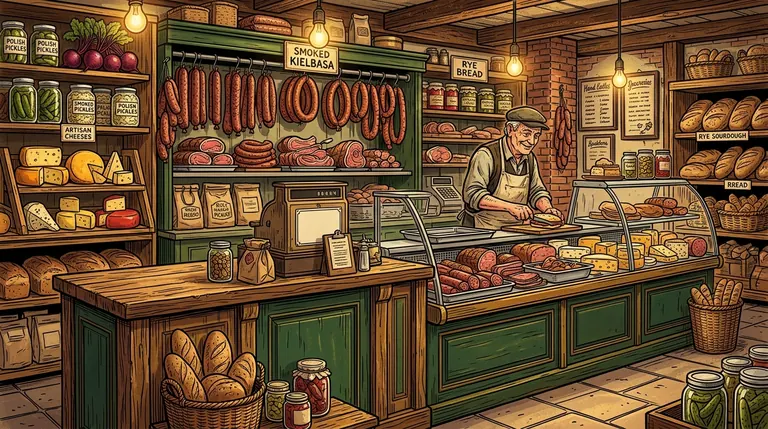
In New York you can spot real Polish kielbasa by the label: pork listed first, a short spice list (salt, pepper, garlic, marjoram), real wood smoke rather than added smoke flavoring, and no mechanically separated meat, starch or soy protein. At Ranczo Deli in Ozone Park and Beata Deli in Valley Stream you can ask about ingredients at the counter.
In this guide you will learn
- Ingredients are listed by weight: pork should come first and water well down the list
- A short spice list is a good sign; starch, soy protein and mechanically separated meat are red flags
- Smoke flavoring added means the sausage may never have seen a smokehouse
- Names like wiejska, krakowska or jałowcowa describe recipes but are not protected in the US
What should come first on the ingredient list?
In both the US and the European Union, ingredients are listed in descending order by weight, so the first few items tell you almost everything. In good Polish kielbasa the list starts with pork, sometimes pork and beef, followed by salt, spices and garlic. Water can appear, but it should not be sitting in second place.
A short list is a good sign. Kiełbasa wiejska (country-style sausage) needs meat, salt, pepper, garlic and marjoram; jałowcowa adds juniper. Curing salt with sodium nitrite is not a red flag, since traditional smoked sausages are cured too: it keeps the meat pink and safe. Be wary, though, when corn syrup, several sugars or a string of phosphates show up before the spices.
Real wood smoke or just smoke flavoring?
Traditional kielbasa is smoked over hardwood. US labels have to disclose added smoke flavoring, so a line like smoke flavoring added or liquid smoke means the sausage may never have been in a smokehouse at all; the smoky taste came from a bottle.
You can see real smoking, too. The casing is dry, slightly wrinkled and brown, often unevenly colored where links touched each other in the smoker. Flavored sausage tends to be perfectly uniform in color, sometimes boosted with caramel coloring, with a wet, slick casing. Slice it open and the aroma gives it away: deep and savory rather than sweet and artificial.
| On the label | Good sign | Red flag |
|---|---|---|
| First ingredient | Pork, or pork and beef | Water, mechanically separated chicken or turkey |
| Smoking | A smoked claim, dry brown casing | Smoke flavoring added, uniform artificial color |
| Seasoning | Salt, pepper, garlic, marjoram, juniper | A long list of flavor enhancers |
| Fillers | None or trace amounts | Starch, soy protein, carrageenan high on the list |
| Name | A specific type: wiejska, krakowska, jałowcowa | A vague Polish style with ingredients that do not back it up |
Wiejska, krakowska, jałowcowa, biała: what do the names mean?
Kielbasa simply means sausage in Polish, so the second word does the work. Wiejska is coarse-ground pork with garlic and marjoram, smoked and often shaped like a horseshoe. Krakowska sucha has big visible chunks of meat and is dried, so you slice it thin for sandwiches. Jałowcowa is dried and scented with juniper. Kabanosy are thin, dry snack sticks. Żywiecka is a smoked sandwich sausage.
Biała, or white sausage, is the exception: unsmoked and usually sold raw, it is the Easter sausage that goes into żurek soup. It must be boiled or baked before eating unless the label says it is pre-cooked. Kabanosy and kiełbasa jałowcowa hold the EU's Traditional Speciality Guaranteed status, which protects their recipes, but that protection does not extend to the United States.
Which front-of-package claims guarantee nothing?
In the US, kielbasa, Polish sausage and Polish style are not protected names. Turkey sausages, products made with mechanically separated meat, or sausages bulked up with starch and soy protein can all use them. The same goes for old world, traditional and authentic: marketing words with no standard behind them.
Mechanically separated meat, listed as mechanically separated chicken or turkey, is a paste recovered from bones by machine. It is legal and safe, but it has nothing to do with traditional kielbasa. Fillers work the same way: starch, soy protein and carrageenan hold water so a cheaper product weighs more. When you see them near the top of the list, you are paying for water.
How should you store kielbasa at home?
Keep smoked sausages like wiejska or żywiecka in the fridge, ideally wrapped in butcher paper rather than sealed tight in plastic, which makes the casing damp and slick. Once a factory package is opened, follow the date on the label and finish it within a few days. A slimy film, a sour smell or gray spots on the cut side mean it goes in the trash.
Dried sausages such as krakowska sucha, jałowcowa and kabanosy hold less water and keep longer, but they still belong somewhere cool, and in the fridge once cut. Treat raw biała like fresh meat: refrigerate it as soon as you get home and freeze it if you will not cook it soon.
Where in New York can you ask about ingredients before you buy?
At Polish delis, kielbasa is often sold by weight from behind the counter, so there may be no package to read. That is fine: ask to see the producer's label or ask what is in it. At Ranczo Polish Deli, 93-04 101st Avenue in Ozone Park, Queens, kielbasa and cold cuts arrive on Wednesday, Thursday and Friday, which is when the selection is best.
Beata Deli, 234 Rockaway Avenue in Valley Stream, carries kiełbasa wiejska, krakowska sucha, jałowcowa, żywiecka and biała, plus kabanosy, pork tenderloin and smoked bacon. Staff at both stores speak English and Polish, so it is easy to ask how two sausages differ. Questions before you drive over? Call +1 (917) 327-1210.
For more practical details, see our related guides on guide to Polish delis in New York, as well as where to buy authentic Polish kielbasa in NYC, as well as Polish food glossary with pronunciation, as well as kielbasa and cold cuts at Ranczo Deli in Queens.
How to Check a Kielbasa Label in One Minute
- Flip the package and read the ingredientsThe first ingredient should be pork (or pork and beef). Water, starch and sugars should not sit near the top.
- Check how it was smokedLook for a smoked claim; the phrase smoke flavoring added signals a shortcut.
- Scan for fillersMechanically separated meat, soy protein, starch and carrageenan lower the cost, not raise the quality.
- Ask at the deli counterPolish delis often sell kielbasa by weight with no label in sight. Ask to see the ingredients or call +1 (917) 327-1210.
Key terms in this guide
- Mechanically separated meat
- Meat paste recovered from bones by machine, usually poultry. It shows up on US labels as mechanically separated chicken or turkey and is a cheap stand-in for real cuts.
- Wood smoking
- The traditional method of finishing kielbasa in hardwood smoke. It leaves a dry, uneven brown casing and a flavor that added smoke flavoring cannot copy.
- Traditional Speciality Guaranteed (TSG)
- An EU label that protects a traditional recipe. Kabanosy and kiełbasa jałowcowa carry it, but the protection applies in the EU, not in the United States.
Frequently asked questions
Is sodium nitrite a sign of bad kielbasa?
No. Curing with nitrite salt is standard in smoked sausages, traditional ones included; it gives the pink color and keeps the meat safe. What matters more is what sits at the top of the ingredient list.
Is anything labeled Polish style actually Polish?
Not necessarily. In the US neither Polish style nor kielbasa is a protected name, so turkey-based or filler-heavy products can use it. Read the ingredients, not the front of the pack.
Do I need to cook biała kiełbasa?
White sausage is usually sold raw and must be cooked before eating, though some is sold pre-cooked. Check the label or ask at the store.
Visit Ranczo Deli in Queens or Beata Deli on Long Island
Both stores share one phone number: +1 (917) 327-1210. We speak Polish and English.
Keep reading
Guides related to this topic.
Where to Buy Authentic Polish Kielbasa in New York City: The Definitive Smokehouse Guide
Looking for authentic Polish butchers and wood-smoked kielbasa in NYC? Discover Polish specialties, farmhouse sausage & kabanos in Queens and Long Island.
The Ultimate Guide to Authentic Polish Delis & Grocery Stores in New York City
Searching for a Polish store or Polish deli near me in NYC? Visit Ranczo Polish Deli (Queens) & Beata Deli (Long Island) for smoked kielbasa, pierogi & Polish beer!
Polish Food Glossary for Americans: 24 Names Explained, with Pronunciation, NYC
What is żurek, and how do you say pierogi or gołąbki? 24 Polish food names with simple pronunciation, plain-English meanings and where to try them in NYC.